Author: Adi Sathe

  • Timeless Treasures – Book Review

    Timeless Treasures – Book Review

    India now boasts itself as an IT hub of the world. However, when I was growing up it was a different situation. The book turned page as the name Infosys emerged on the horizon of the “tech” field of India. At the beginning of the new millennium, it had grown to a leading company in the IT world where every IT enthusiast aspired to work at. I remember my engineering days where my fellow students kept looking towards Infy to come for campus interviews. Their Mysore training campus was something they used to lookout for. It had a big clout back then. I am sure that it still carries the same one.

    Why am I remembering all this?

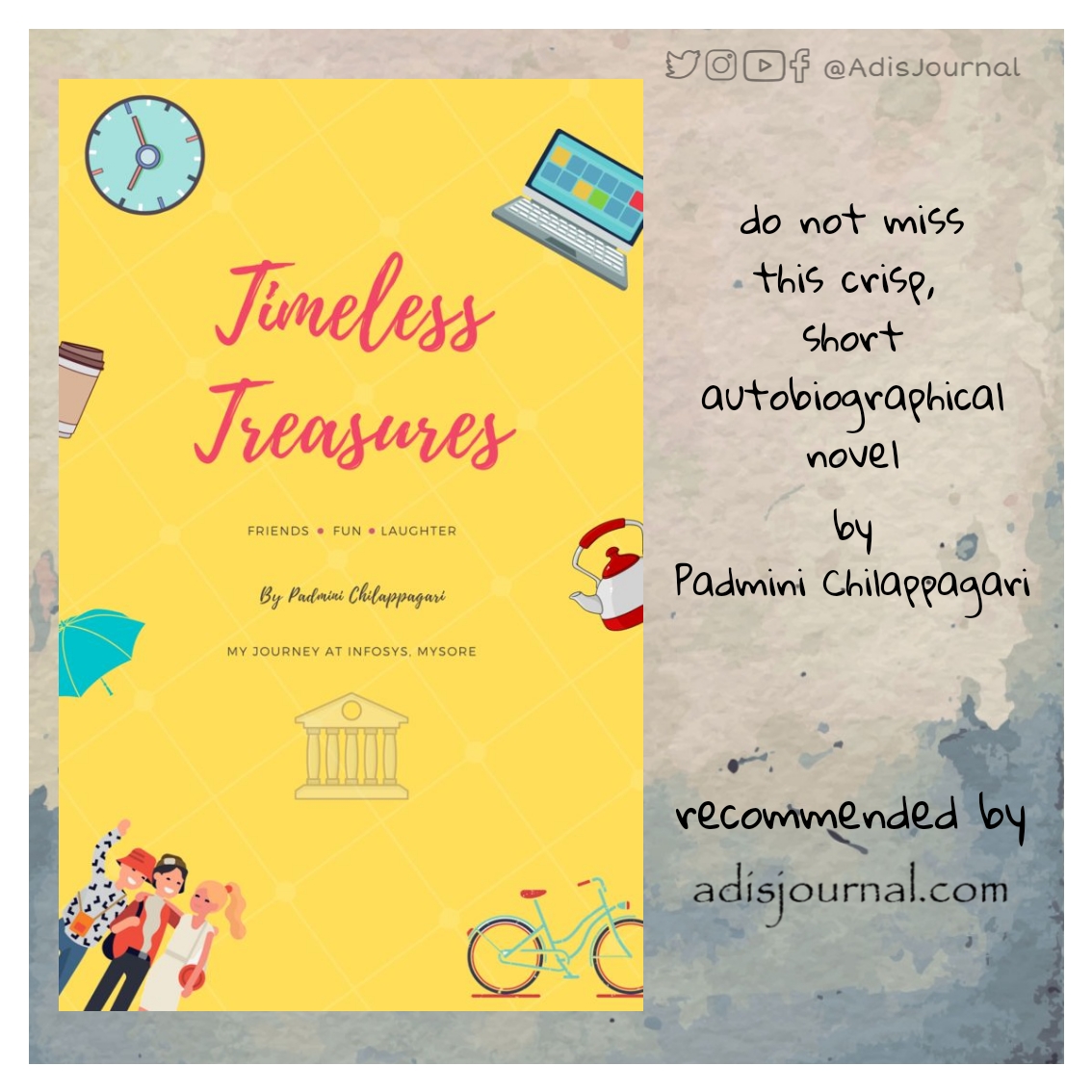
    The reason behind all these memories, I recently came across one fabulous short book set in the Infosys Mysore campus. Timeless Treasure by Padmini Chilappagari is a tale of three college friends who got placed in Infosys through campus placement. The story shows us the glimpses of the famous five-star training campus of Infosys Mysore and all the fun it has. 

    This autobiographical novel is very crisp and short. Padmini entices us with just enough pinch of love and romance and keeps us glued to the screen till we finish the book from cover to cover. I managed to get this one through in just a couple of hours. She has managed to keep it so simple and real that you can’t even guess which part is her real experience and what she has imagined for the story. It won’t surprise me if  we see her novels on the shelves of stores with some amazing publisher’s tag soon!

    Book Blurb:

    “Priya, Myra, and Arjun are three college friends who are hired by the IT giant, Infosys Ltd. For all the college hires of Infosys, it is mandatory to be trained at the Mysore campus for a few months before posted to a job location. Thus, the trio end up on the amazing campus which spans over 350 acres. Read on as the three friends experience good days, bad days and discover life like never before.”

    About Author:

    A software engineer with a passion for reading, writing and blogging, Padmini has grown up reading books. She is inseparable from them. Writing comes as her second love only after reading. She writes to express herself and set her soul free. 

    Timeless Treasures by Padmini Chilappagari

    My rating ★★★★✰ (just one star less from whole five only because it is too short!)

    You can get your copy here. It’s FREE!!!


    Want to know more about my favorite books? Checkout my bookshelf.

  • जिंदगी एक सफर है सुहाना – a Wonderful Hindi Travel Guide Book

    जिंदगी एक सफर है सुहाना – a Wonderful Hindi Travel Guide Book

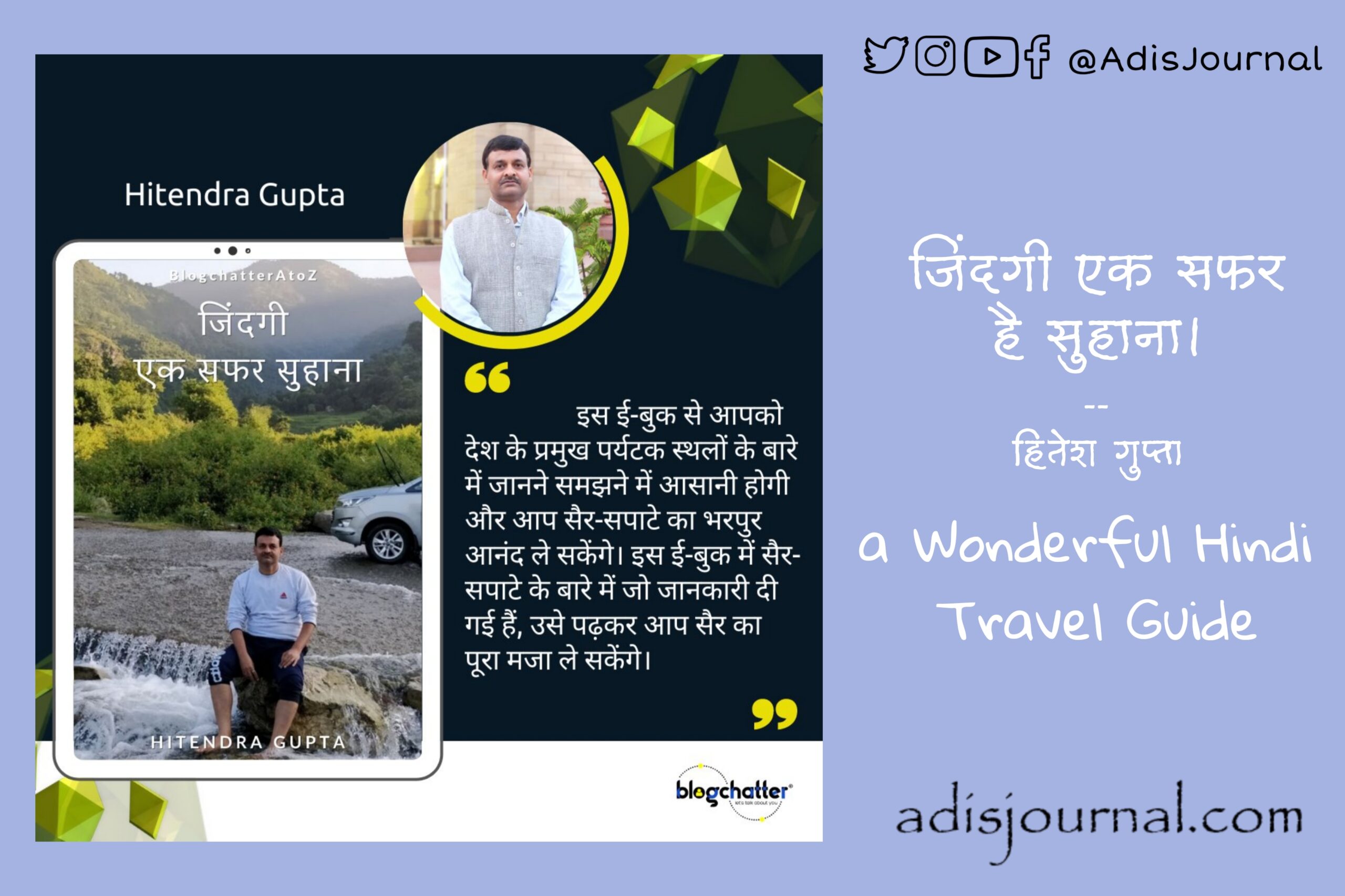
    Books have a very important place in my life and I love to travel. In the last year, I was fortunate to grab quick trips to nearby places when places opened up between these two COVID waves. But today I am talking about a book which encourages you to travel. Recently while browsing through the library of Blogchatter eBooks, I came across a book by Hitendra Gupta. Titled with a lively old Bollywood number “जिंदगी एक सफर है सुहाना”, it immediately takes you on a road trip. 

    Why should you pick this book up

    Hitendra has described many places in northern India ranging from glorious temples to the natural beauties in North Eastern states of India. He has presented important information about things or places which you should not miss if you happen to visit that particular destination in a very easy to understand Hindi. I have not come across any Hindi travel language book on Blogchatter eBooks library. He gives the best route to reach and best time to visit the destinations at the end of the chapter. This makes it easy for readers to plan their travels accordingly.

    I found this book interesting for a couple of reasons. First highlight was the inclusion of COVID appropriate checklist for travelers during and post pandemic situation. This will definitely come in handy while preparing for our upcoming travels. And next one is the weekend getaway or one day destinations in and around the capital city of our country, Delhi. These weekend get-aways are a very important part of youth from metro cities of India. Have you have recently shifted to Delhi to study or to work? Then, I will definitely recommend you to go through the details of amazing weekend destinations around Delhi described by Hitendra. You will save a lot of world wide web searches while planning your itinerary.

    The only thing which I would have liked more was the visual appeal through the photographs. If there were more photos in the book, it would have helped us readers to create an image of what to expect when we visit the destination.

    Blurb:

    इस ई-बुक से आपको देश के प्रमुख पर्यटक स्थलों के बारे में जानने समझने में आसानी होगी और आप सैर-सपाटे का भरपुर आनंद ले सकेंगे। इस ई-बुक में सैर-सपाटे के बारे में जो जानकारी दी गई हैं, उसे पढ़कर आप सैर का पूरा मजा ले सकेंगे।

    About Author:

    Hitendra Gupta – Travel Blogger, Explorer, Nature- Music Lover, Vegetarian Delhi- Noida

    My rating: ★★★✰✰

    You can get your copy from this link.


    Want to know more about my favorite books? Checkout my bookshelf.

  • Being Good Enough- Gripping Contemporary Indian Novel

    Being Good Enough- Gripping Contemporary Indian Novel

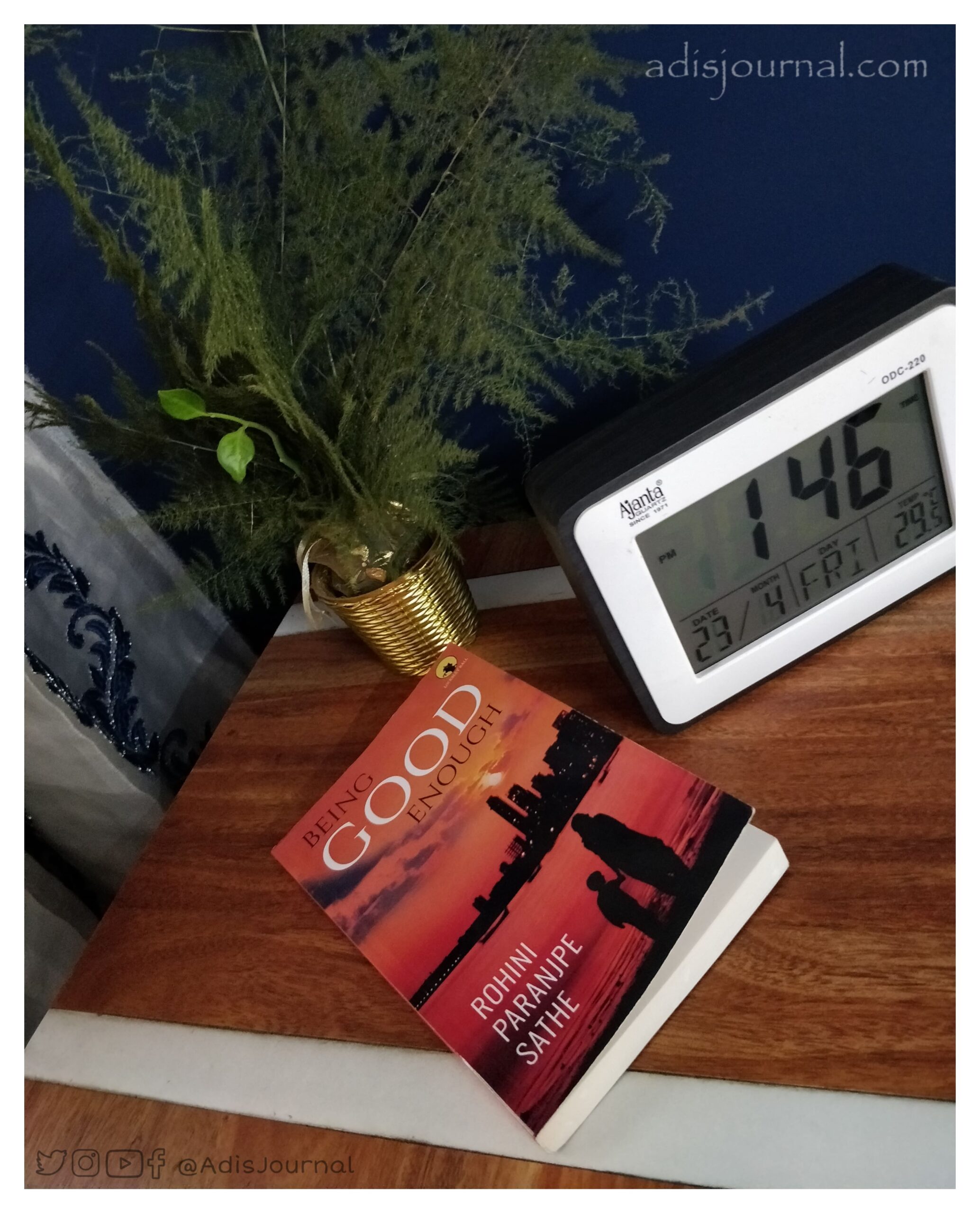
    When you grab a book, it entices with you by it’s cover and blurb. Being good enough, a debut novel of Rohini Paranjpe Sathe ticks all the checkboxes for you to get this book from the shelf. Vibrant shades of colors of dusk with a classic Mumbai skyline catches your eye. Blurb says it’s a story of Jyoti who’s living a hard life in a small chawl in the city of Mumbai with her son. Struggling to keep the ghosts from her past far away from herself and her son. However, those ghosts show up at their doorsteps disrupting her life in Mumbai.

    Story opens up the door of the past and starts telling us what these ghosts are. Glimpse from Jyoti’s early life in a wealthy influential family of Delhi opens wide the story of these ghosts from the past. Completely in accordance with Murphy’s law, anything that can go wrong, will go wrong, Jyoti keeps getting surprises at every corner and struggle continues. If you want to know how it ends, what happens with those ghosts from the past, you should not wait to pick this book as your next read.

    Coloured in the shades of religious divide, dirty politics, youthful love affairs and “khandaan ki ijjat” book is full of drama and reads quickly. Story is so gripping and enticing that it becomes really difficult to keep the book away if you have some work to get done. Even though it’s the debut novel of Rohini Sathe, it never shows up in the book. She is a master storyteller.

    Places, Characters and Writing

    Sathe has structured lives from both the worlds with finnes. One is posh affluent Delhi families and other is close-knit community of Chawls in Mumbai. Story goes back and forth in time and space. It travels between Jyoti’s present residence of Mumbai and her past home in Delhi. Jyoti’s Delhi times is full of religious divides, social stigmas around love affairs, a trap marriage with gay man. While for Mumbai, we read about life in a chawl. It’s characterized with helpful neighbours, their bonding, constraint of space, common activities of community, their daily routine, etc. 

    Another strong point is the characterization and the relations they share. We can’t put every human in black or white. Life is full of grey areas. All of the characters in this book show this grey tint as the story unfolds. Sometimes, black part flares up when provoked by religious divide or power struggle. Even a fierce fighter in Jyoti takes a step back with compassion at a couple of moments. The bond of friendship shared by Jyoti and her husband in the trap marriage is a nice touch. It shedes some light on the LGBTQ+ community and stigma which our society has around it. These spectrums of emotions make Sathe’s characters more humane. 

    I would definitely recommend this book if you are interested in reading a contemporary Indian story. If this fast paced, gripping tale of fierce Jyoti is not Good Enough reason to pick up “Being Good Enough” then I am not sure what will be. So, don’t waste time and grab your copy here.


    This review is powered by Blogchatter Book Review Program. If you want to know more book recommendations from me, then don’t forget to follow my social media accounts and check past reviews here.

  • Ziro Valley – A Heaven from North-East

    Ziro Valley – A Heaven from North-East

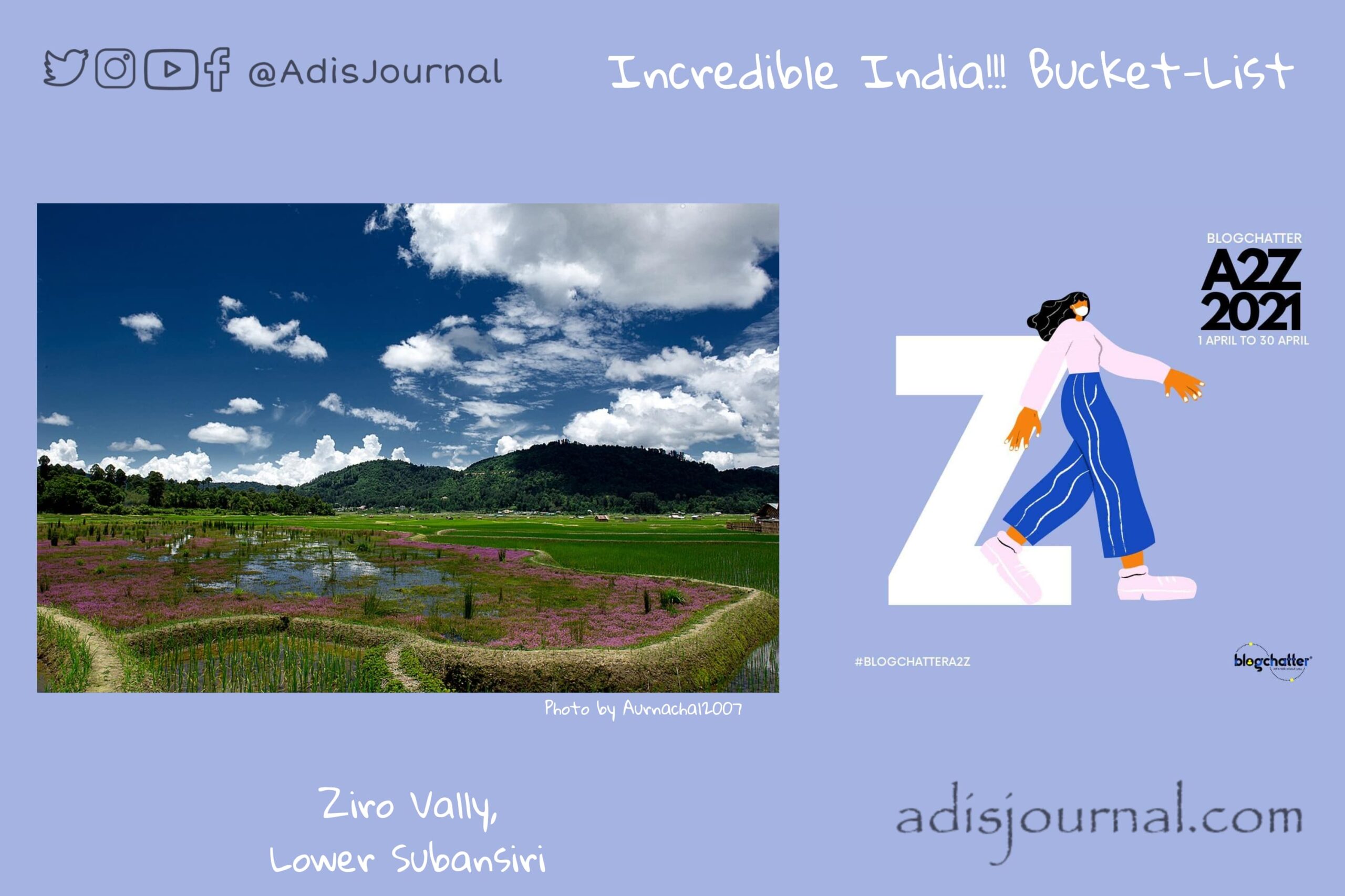
    North-Eastern India is blessed with the sheer beauty of nature. Small towns and villages snuggled in valleys of Himalaya are little heavens on earth. Today we are visiting one such heaven in Arunachal Pradesh. Ziro Valley, a heavenly town in Lower Subansiri District.

    About Ziro Valley

    Ziro is a district headquarters of Lower Subansiri District. It is one of the oldest towns of Arunachal Pradesh. Rice fields surround this small yet beautiful hill station. The town of Ziro is nestled between a cluster of beautiful pine trees. This plateau is at an altitude of 1500 m above sea level. As a result, Ziro is full of a distinguished and rich flora and fauna and its biodiversity. This makes it an ideal destination for nature lovers. Thick forest covers this entire region and is a home to tribal people.

    The ApaTani tribe which calls these lands as their home is not a nomadic tribe, practicing permanent wetland agriculture. This is very different from the prevalent jhoom farming. Other than wetland farming, they earn their livelihood by making handicrafts and handloom products. They worship nature gods. The tribe is known for their colorful culture with various festivals. Apa Tani people have vibrant traditional village councils called bulyañ. This has made Ziro Valley a good example of a living cultural landscape where man and environment have harmoniously existed together in a state of interdependence even through changing times, such co-existence being nurtured by the traditional customs and spiritual belief systems.

    Gallery

    Tourist attractions

    The major tourist attractions of Ziro are the green serene Talley Valley, the hillock Ziro Putu, Tarin fish farm, the tall idol of Shiva Lingam at Kardo. ApaTani people celebrte several festivals namely the Myoko Festival in March, the Murung Festival in January and the Dree Festival in July.

    Ziro is also known for its outdoor music festival. First festival happened in the year 2012. Members of the ApaTani tribe host this festival. Festival celebrates the independent music scene of India. Festival is celebrated on two stages, Donyi(Sun) and Polo(Moon), constructed by local artisans and made almost completely of bamboo. As a result, it is noted to be one of the most eco-friendly festivals in India employing locally sourced material for the infrastructure. The festival has a zero plastic policy and encourages attendees to be responsible for leaving behind no waste.


    I am participating in the A2Z challenge with Blogchatter and this is my take on the ‘Z’ challenge. “Z is for the Ziro Valley, Lower Subansiri, Arunachal Pradesh”. You can find my other posts from this challenge here.

  • Yamunotri – Birthplace of the River Yamuna

    Yamunotri – Birthplace of the River Yamuna

    Indian culture puts rivers at the place of goddesses and worship them. India People celebrate every river and worship them. Today we are visiting the birthplace of one of the holiest rivers in India, Yamunotri: Birthplace of the River Yamuna.

    Personification of River Yamuna Photo by I Sailko Copyrights CC BY-SA 3.0

    Stories of the Yamuna

    According to Hindu beliefs, there are many stories associated with this river. These stories are in connections with many gods like Shiva, Surya, Krishna etc. River Yamuna is mentioned several times in the Rigveda, Atharvaveda, Aitareya Brahmana, Shatapatha Brahmana and many Puranas. Goddess Yamuna beares other names as Yami and Kalindi. Yami is a twin sister of god Yama, the God of Death and daughter of the sun god Surya. These relations gave her the name Yami and Yamuna.

    However, for the name Kalindi, there are many stories. One of them is related to lord Shiva. Distraught by the death of his wife Sati, Shiva wandered the whole universe. The god of love Kamadeva shot Shiva with the arrow Unmadastra, that made Shiva restless and excited.  He jumped in the river Yamuna to overcome his urges. While bathing in the river Yamuna, the river turned black because of Shiva’s sorrow and unfulfilled desire. Another story describes the story of the banishment of serpent Kaliya in the Yamuna. As the black serpent entered the river, it turned black.

    Shrine of Yamunotri

    Shrine of the River Goddess Yamuna is situated at an altitude of 3,291 metres (10,797 ft) in Uttarkashi district, Uttarakhand. You can reach the shrine by hiking on several routes. One of them starts from Janaki Chatti and a couple of them goes from Hanuman Chatti. This temple is a part of India’s Chota Char Dham pilgrimage. The temple of Yamunotri got destroyed twice by snow and floods. However, after every incidence, people rebuilt the temple again. Maharani Guleria of Jaipur re-built the Yamunotri temple in the 19th century. There are two hot springs near the temple. The temple and place opens every year on the auspicious day of the Akshaya Tritiya and continues to be open till Yama Dwitiya in Diwali.

    Yamunotri Temple built by Maharani Guleria of Jaipur in the 19th century- Photo by JediPro Copyrights CC BY-SA 3.0

    I am participating in the A2Z challenge with Blogchatter and this is my take on the ‘Y’ challenge. “Y is for the Yamunotri Temple, Uttarkashi”. You can find my other posts from this challenge here.

  • Xuan Zang Memorial Hall – Honoring the travelling wisdom seeker

    Xuan Zang Memorial Hall – Honoring the travelling wisdom seeker

    Medieval India attracted a lot of foreign travelers from all around the world. They documented their experiences in chronicles for the coming generations to read and enjoy the travelling experience in both time and space through their eyes. Today we are visiting a memorial hall built in honor of one such traveler. Xuan Zang Memorial Hall built in Nav Nalanda Mahavihara.

    Japanese painting of Xuan Zang from Kamakura Period

    Story of Xuan Zang

    Xuanzang, commonly known as Hiuen Tsang in India, was a Chinese Buddhist traveller, travelling through India in search of the ultimate wisdom that India has to offer. He travelled extensively across the length and breadth of the subcontinent. Xuan Zang came in from Khyber Pass and travelled south-eastwards visiting Stupas and Viharas around Peshawar, Oḍḍiyāna, Ruins of Taxila, Kashmir, places in Punjab, Himachal Pradesh and then crossed the River Yamuna and reached Mathura. He continued his travels until he reached Nalanda with some local monks. He stayed in Nalanda studying about buddhist philosophy for about two years. During this time, Xuanzang studied logic, grammar, Sanskrit, and the Yogacara school of Buddhism. 

    After this, he started his journey south and travelled towards Andhra Pradesh. He visited viharas at Amaravati and Nagarjunakonda and studied more about Buddhism. He continued traveling to Nasik, Ajanta, Malwa; from there he went to Multan and Pravata before returning to Nalanda again. After a short stay in the area of Sylhet, Kamapura and Prayag, Xuan Zang returned to China via Khyber pass through Kashgar, Khotan, and Dunhuang. Chinese people celebrated his return after 16 years with a great procession.

    Story of the memorial

    Bhikkhu Jagadish Kashyap, the founder Director of Nava Nalanda Mahavihara first proposed the establishment of a Memorial Hall as a symbol of Indo-China friendship dedicated to the great Monk, scholar Ven Xuanzang. He believed this memorial will serve as homage to Xuanzang’s spirit of freedom and quest of knowledge. Hall was established on the southern bank of Padmapushkarni Lake in 1957 where the Government of India received the relics of Ven. Xuanzang along with an endowment for the construction of the Xuanzang Memorial Hall and some Chinese Buddhist texts.

    There were repeated requests for renovation. Even various plans were drawn. However, only in 2007, renovation and reconstruction of the memorial is done. Today we can see a renovated and refurbished memorial hall housing these relics and texts. Hall shows a mix of Chinese and Indian architecture with classic sloping curved roofs with blue tile. People believe that curved lines ward off the evil spirits who only travel in straight lines. Rich red color depicts joy and happiness and keeps ghosts away. Chinese and Indian cultural elements are woven in the building and they create a peaceful environment.

    Xuan Zang Memorial Hall Nalanda – Photo by Tabish Q –
    Copyrights CC BY-SA 3.0

    I am participating in the A2Z challenge with Blogchatter and this is my take on the ‘X’ challenge. “X is for the Xuan Zang Memorial Hall, Nalanda”. You can find my other posts from this challenge here.