Author: Adi Sathe

  • Let’s start with A of Map-reader’s ABC

    Let’s start with A of Map-reader’s ABC

    Since the widespread use of smartphones, one thing which has improved is commuting between new places. Exploring unknown areas, visiting new cities and towns around the globe is now easy. Google maps and apple maps are one of the most used apps in our lives. “Please share your current location and I will reach you.” “Sir, location sahi hai na?” “Mam, address nahi mil raha, please pin bhejo na.” These dialogues are now very common in our day-to-day life. But, these are not the only maps and using other maps can also be fun. Today, I am starting to write a series about maps and how to read them.

    Map-reading? Wo kya hota hai?

    I have been working as a map-maker since 2012. Making these different maps is fun work. I get a chance to know a lot of things which otherwise I would not. But one thing I have observed is that the general public is missing the fun of using maps. When we start our course in development planning at CDSA, Pune, we organize a fun Treasure Hunts in some parts of the city. I have witnessed students getting confused if we hand them over some printed maps and ask them to come to a particular location. Opening a paper map from books or atlas used to be a fun part of my childhood. However, now it seems people are more and more relying on gadgets.

    So, map-reading is a basic skill which helps you to use the piece of paper on which location information is printed and reach your destination or have an understanding about a particular issue.

    I would like to take this opportunity and introduce you all to the fun part of maps and map-reading. Hope by the end of this month, you all would love to get a map out and get on with your own adventure.

    Let’s start with A of Map-reader’s ABC

    Today, I will tell you the basics which make any diagram into a map. There are four key components without which, map is incomplete.

    • Orientation
    • Scale
    • Title
    • Legend / list of symbols

    Orientation:

    Orientation is the most important factor of any map which allows its user / reader to align him/herself with its surroundings. In the world of map-making, a norm has been set. Every map will have a North direction towards the top side of the paper or screen. However, this is a very recent standard which has been set during the glorious days of maritime trade and explorations. Seafarers felt the importance of magnetic north and started this practice. Before that, European map makers used to orient their maps to the East as direction towards the holy city of Jerusalem. The word itself is derived from “Oriens”, a Latin word for East.

    A map of New Netherlands and New England created by Dutch cartographer Willem Blaeu has a west orientation, 1635.

    Cartographers, guys who make maps, who went to the New world like Willem Blaeu, oriented their maps toward the west and Japanese map-makers during the 17th and 18th centuries didn’t even have standard orientation. Just imagine the headache it would give to its readers. For you to understand this, do one thing. Open google or apple maps in your friend’s phone and rotate the map using two fingers to some random angle and give it back. Then ask your friend to understand the lay of land! It would be fun to watch the expression on his or her face!

    So, keep in mind, in modern maps, North is at the top. Mostly!

    Scale

    Scale is the measure which allows the reader to get an idea about the distances between places on a map. Generally scales are mentioned at the bottom left corner of the map. You will find a graduated scale or a ratio of numbers. Scale depicts the distance on paper to the corresponding distance on the ground. For example, if the scale is 1:24,000, then 1 cm on the map will be 24,000 cm on the ground.

    Map made by CDSA, Pune

    Title

    Title of the map gives you an idea about the story that map is telling you. In the above map, title “Water availability at villages in Bhadwad Level 3 cluster” gives a clear idea about things shown in the map. Generally they are put in bold letters and at the top. However, some maps may show it in a much fancy way like Blaeu’s map of New Netherlands.

    Legend / List of Symbols

    Map is a colourful document full of various symbols and patterns. They have a specific meaning depicting various information points about that particular place. For ease of reader, these symbols, colors and patterns are explained in a form of a list. (Mostly on bottom right corner of the map, just like in the map above)

    Sometimes, a map is provided with additional information, notes and other details but comes as a bonus. For you to call a map, a map, these four things are must. So, with these four things in our mind, let’s start our wonderful journey of reading maps. Hope you will enjoy the time with me this month. Waiting for your response in the comments below.


    I’m participating in #BlogchatterA2Z. You can read my other posts about maps and map-reading here.
  • Zero Day: Masterpiece of Thriller Mystery

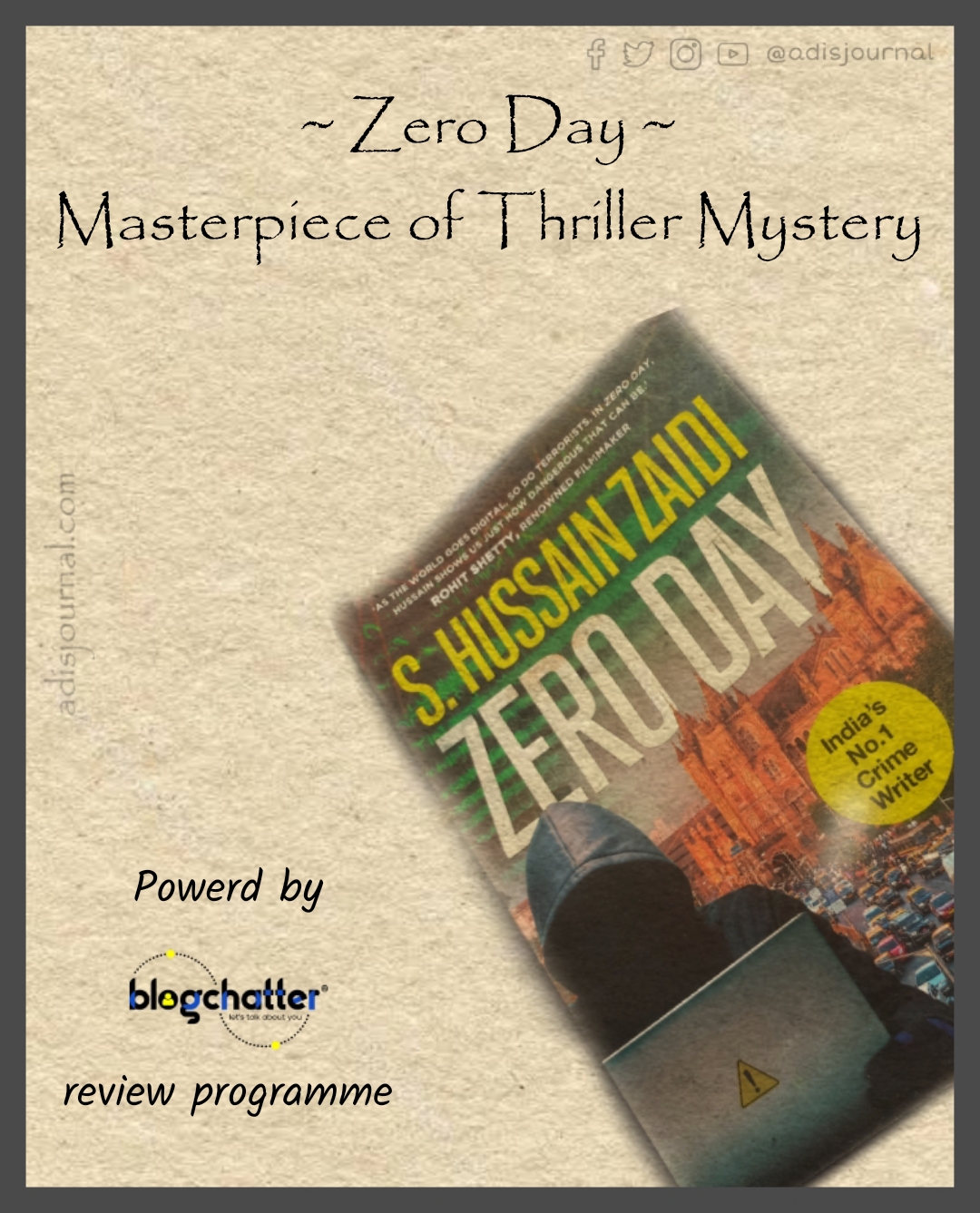
    Zero Day: Masterpiece of Thriller Mystery

    You guys by now must have understood my liking for good mystery, crime and thrillers in the book world. I enjoy reading a good fiction novel or a story having crime, investigations, espionage and all the thrill attached to it. This new book by S. Hussain Zaidi is a masterpiece and sheer pleasure for any bibliophile who enjoys these genres. 

    What makes this masterpiece unputdownable?

    Any mystery or thriller works on three points, what crime is committed, who committed it and why? Generally opening with a crime scene story or novel moves through the maze of clues and challenges to reach the pinnacle where investigators reveal the identity and motive of the perpetrator. But hold on, Zero Day beats this stereotype. You know who the criminal is as well as why he’s doing what he is doing. Yet you will just keep reading to know the missing links. This is a very unique style of writing crime fiction.

    Language used by Zaidi is so simple and the narrative so fast paced, readers just get hooked on to the story. Once you start reading it, you won’t put it down until you have the answers to all the questions by the end of the book. I have finished this book with little over 200 pages in 6 hours. That too because I have to keep completing my tasks for the day on my job. If I could, I would have loved to finish it in one go.

    Blurb

    Mumbai is in a state of chaos. All traffic signals across the entire city have stopped working.

    Shahwaz Ali Mirza, head of the Maharashtra Anti-Terrorism Squad, receives an anonymous email claiming it to be a Distributed Denial of Service (DDoS) attack. He quickly puts together a crack team that includes his protege, IG Cybercrime Vikrant Singh, and gets to work trawling the dark web for more information on this mystery attack. However, a move to bring forward the hacker backfires, leading to a second, deadlier attack on Mumbai’s lifeline, the railway system.

    It is their first brush with cyberterrorism: a zero-day vulnerability in the Indian government’s system that could bring the country to its knees. Racing against time and investigating a case unlike any other, in Zero Day, Mirza and Vikrant face the most dangerous mission of their lives.

    About the book

    Title: Zero Day
    Author: S. Hussain Zaidi
    Publisher: Harper Collins
    Pages: 216

    Where to Buy

    Should you read it?

    I think I have found the first 5 star book of the year 2022. I can not recommend it enough for you guys to read. If you are a sucker for good investigative stories, you should not miss zero day. I have given you the link to grab your copies above. Do let me know how you like it if you have already read the book!


    This review is powered by the Blogchatter Book Review Program. Also read more book reviews penned by me here.

  • What’s for BlogchatterA2Z? – Theme Reveal Post

    What’s for BlogchatterA2Z? – Theme Reveal Post

    April is that time of the year when your skill of consistent writing is put to the test. It’s time for the April A2Z campaign hosted by Blogchatter. 2022 is my fourth year after my successful stint in April 2021. Last year’s campaign was a boon for me. It gave me my first eBook Incredible India Bucket List, which is available on Blogchatter bookshelf for you all to read. This post is to tell you the theme I chose for the campaign of 2022.

    Marrying passion with profession for theme for 2022

    I have been working at the Centre for Development Studies and Activities, Pune for the past 7 and half years. We work in the development planning sector with sustainability as our core value. I work as a mapmaker in our institute. I enjoy every bit of my work as a map maker. We have prepared some interesting maps working with the urban data in the past 3-4 years of our Quantified Cities Movement. Through year’s theme, I am trying to create a “Pocketbook for Map-reader” during Blogchatter A2Z. Hope you will enjoy reading the maps by the end of April 2022 and who knows, start using some in your own work.

    Adi’s Journal A2Z theme

    Pocketbook of Map-reader

    I will take you all on a journey of map-reading. I will explain the basics of map reading, talk about various types of map we make. How the maps evolved over the time with some fun facts about map making. Rest assure, A2Z posts are going to be a fun read. I won’t bore you with technical details!

    I wish you all a great month of blogging ahead. Also, I am excited to read what you guys will be creating. Hope you will enjoy this series and shower your love on this too, just like the last year.

    Blogchatter A2Z Calendar

    I’m participating in #BlogchatterA2Z.

  • Poetry: a beautiful creative craft

    Poetry: a beautiful creative craft

    Every poet, writer or storyteller has been asked some typical questions. In my last article, I tried to give my answer for one of them; “Why” of the writing. But for the past week, I have been thinking about a particular duality in the literary realm. Creativity and crafting. It’s another form of a classic dilemma just like “Chicken or the Egg”. The only difference here is that creativity and crafting are not struggling for who came first. They are struggling to maintain their importance or righteousness in poetry.

    Let’s begin at the beginning

    Creativity and crafting have been two loyal hands for her majesty, the queen Poetry ruling my mind. But her realm is facing an internal turmoil. These two counsel are trying to one up each other. This was triggered during a discussion at an event. Recently at an event of our regular literary meetup called साहित्यकट्टा, we celebrated a fantastic poet Shekhar Damodare from our group and Prose Publications published his poetry collection अक्षरांचे शब्द होता as a surprise to him. During this event, this debate of whether poetry written with pure creativity is the best or the crafting makes it better.

    Incidentally, yesterday I got a chance to ask this same question to another accomplished and prolific poetess Sampurna Chattergy during an exclusive author session “Getting Started with Poetry” of BlogchatterWritFest. Her reply on the issue kept the debate going in my mind. 

    Who’s the champion of the duel?

    So, this is how I witnessed this duel. There are purists in poetry too just like every other field. They look highly to a poem born out of the spontaneous bursts of creativity. I have no problem considering so highly of these poems. However the way they look down upon poems which have been edited, rewritten, crafted after the initial creative spontaneity. 

    On the contrary, there’s one more side on the other end of the extreme. They believe anyone can write a poem, they can teach poetry writing. These people are ignoring the fact that poetry is not just an arrangement of words in a particular order or set pattern. It has to originate from deep within. Poet has to see that poem within his or her mind. It takes some form and comes out on paper. If you ignore this part, all it remains is a mechanical robotic arrangement of words in some order which doesn’t have a soul.

    Non-duality of poetry

    What I personally believe is the realm of poetry is a true example of non-duality. It has to have both creativity and crafting. You can not craft if there’s no creative basis to polish upon. And you cannot write a complete, structured masterpiece poem purely on creativity (Excluding some exceptions). Meters, formats and forms of poetry demands that poet follow the precise words, syllable counts, and other grammar rules. These forms demand the use of crafting, editing and rewriting. 

    In a galaxy of Marathi literary legends, Keshavsut, is one name which you can’t miss. We consider him as the originator of modern marathi poetry. Tutari (तुतारी) is one of his most famous poems. He had written and rewritten it several times before it got published in 1893. When such legends are not shunning crafting away, who are we to look down upon? On the other hand, we also should not forget that only crafting will not create a masterpiece like Tutari

    Let’s make a truce between these two hands of the queen Poetry and enjoy the joys of her people. These poems are pure bliss in every form, format and language. 


    This was a very inspiring session personally for me and I am looking forward to upcoming sessions of BlogchatterWritFest. I have written this post as part of BlogchatterWritFest.

  • because I have to write it… – answering “why” of storytelling

    because I have to write it… – answering “why” of storytelling

    As a creative person, your mind is always receptive. It’s always looking out for inspiration. Sometimes, fellow creators inspire you, or sometimes a particular event triggers a chain reaction in your brain. But every story you tell, has that one seed from where it all began to take shape. Yesterday, 4th of March 2022 was one such inspirational day for me. Season 6 of BlogchatterWritFest hosted its session 1 where I listened to three amazing authors whom I admire. Meghana Pant, Kanchana Banerjee and Kiran Manral were fantastic as always. Even though I have only read Eye on You by Kanchana Banerjee till now, I have been following all of them on social media, tracking their books, etc.

    Story will choose its own place on the shelf; you just write it. 

    There are many points which were discussed during this session. However, the most important thing which resonates with me is the authenticity of the story which you want to tell to the world. I cannot agree more that the story you are writing has to be the one which you want to tell and not the one which the world wants to read or listen to. Trends and best seller genres should not guide the story you write. Recently I tried to take a dive in some storytelling. And it became a wonderful experience when I let the story tell itself through me instead of me dictating the story.

    We often hear this thought about poetry. It’s believed that good poetry manifests itself making poets a mere channel of narration. But the story isn’t any different either. Story chooses its own genre. If we sit to write with predetermined notions, the piece resulting after this will look patchy and pretentious instead of being a literature.

    Don’t rush to quit

    I also like the advice which they gave unanimously about taking writing as a full-time profession. One should not rush to quit the job in hand with a dream to become an author. Even in Marathi literature, all the stalwarts were doing something or the other to earn their living and writing on the side. Most of them were working as faculty at various colleges, some worked for films, etc. Incidentally, on the same day, I listened to one podcast where Dhaval Dange, author of Gandhar, and two other novels, mentioned the same point. Dhaval himself works professionally in the IT industry. And has published three books till now. So, just tell your story, don’t rush to quit what’s in your hand and work well for you!

    This was a very inspiring session personally for me and I am looking forward to upcoming sessions of BlogchatterWritFest. This post is written as part of BlogchatterWritFest.

  • Tongue of Slip- a subtle humor that life brings

    Tongue of Slip- a subtle humor that life brings

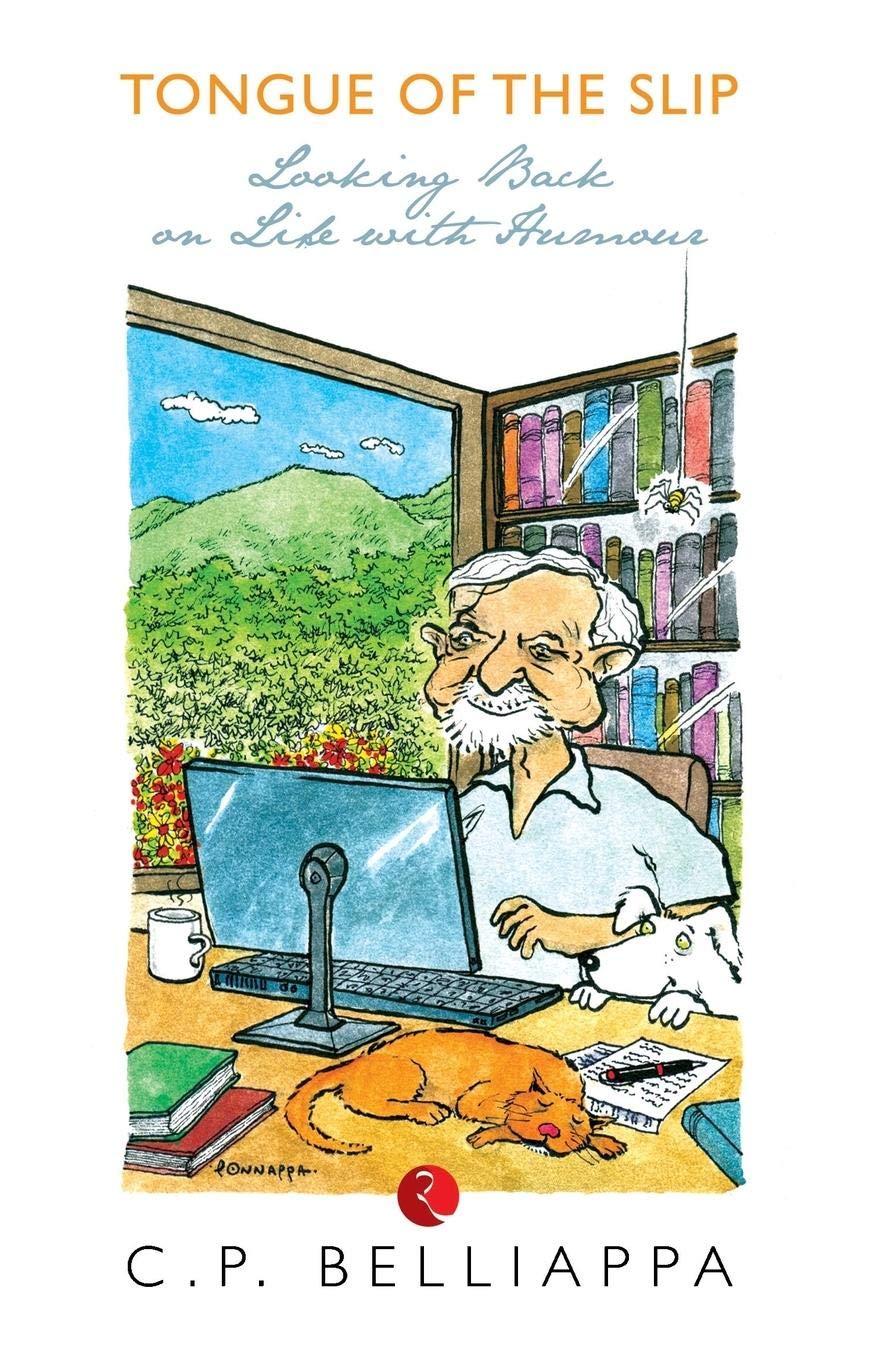
    When an Indian person comes across the name of Coorg, one can only think about beautiful weather, rolling hills and coffee plantations spread across vast lands. However, today I am introducing you to one gem of a person who has dipped his toes in many areas of life. He holds a masters degree in Chemical Engineering, manages his a coffee plantation. And has also written a few books on the history of the region. Meet, Mr. C. P. Belliappa. I recently came across his book called Tongue of Slip while browsing through kindle stores. This one is full of humor

    Humor is spread everywhere in our lives. This is the thing which makes our lives better and he has managed to bring it all in this book. It has a humor from his work, funny things happening around the game of golf. In addition, there is a whole section in book which accounts situations when one literally have experienced tongue of slip or teek in chongue.. (fumble intended)

    If you like to have a good laugh on subtle humor that life brings in. Tongue of slip is your book. I simply loved this good humors book written by C P Belliappa. The way he narrated various funny events, anecdotes and memories is incredible! You should not miss this one…

    Blurb

    In this collection of over fifty anecdotes, well-known humour writer C. P. Belliappa showcases, with his trademark wit, warmth and wisdom, the funny side of life. These slice-of-life stories, drawn from his personal experiences, cover topics such as the wonder years that is childhood and hilarious cultural bloopers, and are replete with pithy observations on everyday situations. From embarrassing diplomatic gaffes committed by State dignitaries to the authors language misadventures in Paris and China, from It Happens Only in India to other rip-roaring social blunders, this book has it all. Sit back and enjoy the eloquent wit and sublime humour contained in Tongue of the Slip this is Indian satire at its best.

    About the book

    Title: Tongue of Slip

    Author: C. P. Belliappa

    Publisher: Rupa Publications India

    Pages: 182

    Where to buy


    You can read more of my reviews here. I am very happy to be a part of Blogchatter’s #TBRChallange.