
 Yesterday, I took you to Assam to meet one of India’s fantastic storyteller Homen Borgohain. Today I would like to take you in 18th century Russia to meet Mr. Ivan Turgenev, one of the finest Russian novelist, short story writer, poet, playwright. It is said that he is the man behind popularizing Russian literature in the West. While East India Company were busy in clutching the power across India, Ivan Turgenev was writing fantastic stories about the Russian society.

Ivan Turgenev was a keen hunter and a great observer of his surroundings and the life and nature of peasants. He had written twenty-five sketches using these observations and anecdotes from the travels throughout Russia for hunting. These sketches are published as a collection with a title A Sportsman’s Sketches or Sketches from a Hunter’s Album. It is translated by Richard Freeborn and published by Penguin as a Penguin Classics and its blurb says “His album is filled with moving insights into the lives of those he encounters – peasants and landowners, doctors and bailiffs, neglected wives and bereft mothers – each providing a glimpse of love, tragedy, courage and loss, and anticipating Turgenev’s great later works such as First Love and Fathers and Sons.”

Considering Turgenev’s later works, it won’t be wrong to conclude that his travels across the country made him witness the cruelty and arrogance of the ruling classes and that reflects in his works. These strong views were the reasons behind his arrest but they became the window to the plight of peasant lives for many contemporary readers. In the mind of Turgenev himself, this was the most important contribution from him to Russian literature while it is reported that Pravda: The official newspaper of Communist Party of the Soviet Union, as well as Leo Tolstoy, was in agreement with this view about Sketches from a Hunter’s Album. It is also considered that this book later led to the abolishment of serfdom from Russia in 1861 as it created a vast public opinion against serfdom.
I find this collection as a window to the 19th-century Russian society and I am eager to know about it more than the wiki pages tell us. If you are interested in this trip to 19th century Russia, come join me.
Book purchase link
Paperback: 416 pages
Publisher: Penguin; Reprint edition (30 August 1990)
Language: English
ISBN-10: 0140445226
ISBN-13: 978-0140445220
I am adding this to the amazing bucket of blogs at #BlogchatterA2Z.

 When I wrote about George Saunders, I wrote about the choices we make every day. However, sometimes you are not satisfied with the choice. I am facing the same dilemma about the author I had chosen for letter H. No doubt Henry James is a fabulous storyteller from the transition period of realism to modernism. My mind was not able to connect with him. I was searching for new name, new figure to look up to. I summoned the services of “Uncle Google” but no satisfactory results came out. I wrapped my work for the day and head out to Crossword to window-shop with my friend. She picked up a couple of books and we were ready to head back to home. Just before we get to the counter, I met Homen Borgohain in form of a beautiful hardbound story collection and I took him home with me.




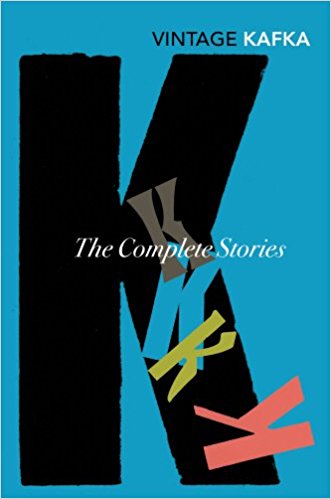
 Are you a fan of science or dystopian fiction? Come let me introduce you to the ideator of this genre of writing. Franz Kafka, German Speaking Bavarian Jew, is one of the important names from the 20th-century literary world. Kafka wrote his stories where the protagonist is always put in surreal, bizarre situations created by social-bureaucratic powers. The protagonist is always struggling with an existential crisis, absurdity, guilt and alienation in Kafka’s stories. His work and writing style has been inspirational for many of the 20th-century writers like Gorge Orwell and Ray Bradbury.

 We need to take a flight back to the USA to pay our respect to this fabulous storyteller. Many of his works are considered as classics of English literature. Nobel laureate Hemingway is a fabulous storyteller who has mastered the craft of telling a story in very simple language, most of his writing is in simple sentences. He has developed a style of describing one thing through entirely different thing which occurs below the surface. Hemingway himself calls this style as an Iceberg Theory (also called a theory of omission). Hemingway liked to tell the story through subtexts, he will not describe the action in a straightforward way, but he will write the things happening around the action so that reader will understand it anyway while reading the story.

 Hola fellow bloggers and lovely readers out there, after our trip to Scotland, USA and Nigeria to meet our first three amazing wordsmiths, are you ready to visit Buxton of Derbyshire, England to meet fantastic storyteller. I would like you to meet fantastic Dan Rhodes; best known for his novel Timoleon Vieta Come Home published in 2003. He has mastered the art of putting an entire punch of the story in a compact form. Anthropology: and a hundred other stories is his debut book which is an anthology of 101 stories about girlfriends written exactly in 101 words each. With this book, he has proved himself to be a commander of words.

