Author: Adi Sathe

  • It’s a grey area…

    It’s a grey area…

    It’s true when you say it’s not always a black and white when it comes to a life. It’s true for every relationship too. May it be a friendship, or a companionship, or romantic relationship in general. I tried penning it in a Marathi free verse. I would also try to give English translation for the same.

    तसं तुझ्या माझ्यातलं सारं काही,
    त्या ग्रे एरिया मधलंच.

    हो नाही, पांढरं काळं
    असं द्वैत तुला मान्य नाही, ना मला

    सर्वच कसं धूसर, अस्पष्ट,
    अगदी दूरवर विरत जाणाऱ्या ढगासारखं.


    आदित्य साठे

    It’s all a grey area,
    covering everything between us.

    We don’t recognize a duality,
    Black -n- White or No -n- Yes

    Everything is blur and fuzzy,
    Like fizzing faraway clouds


    Aditya Sathe

    Please feel free to comment and let me know if I have managed to convey my emotions about grey area through this free verse and it’s translation. English poetry is a new adventure for me. I have just ventured into it and am aware that there’s a long long way to go.


    This blog post is part of ‘Blogaberry Dazzle’ hosted by Cindy D’Silva and Noor Anand Chawla.

    If you like to read more of my poems, click.

  • To begin again

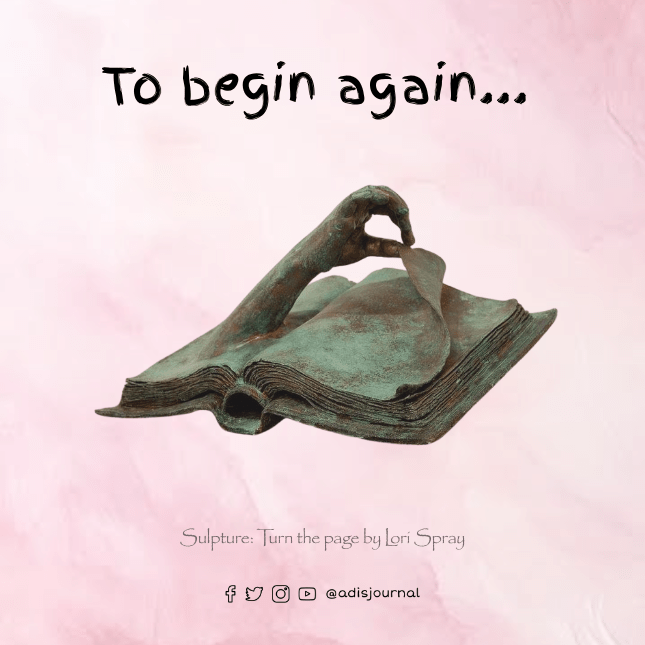
    To begin again

    It’s been days since I turned that last page. I finally put a full stop to my last relationship. And you know how hard it is to move on and start a new life. When there’s no next page to turn, you have no choice but to accept the end. We shared some wonderful moments together; created memories that I’ll always cherish. But alas, every journey has its destination.

    Then again, wasn’t I aware of this ending the moment I took that very first step? Somewhere, deep in the back of my mind, I was always bracing for the moment we’d reach the final chapter. From the beginning, it was clear, there was never going to be a “…happily ever after” for this companionship.

    But hold your horses guys,

    I’m not talking about a girl, and no breakup song is playing in the background. Doesn’t this sound more like finishing a really good book?

    When you crack open a cover and dive into the world an author has so beautifully crafted, there’s always that final page with the words “The End.”
    And if the book is truly fascinating, it casts a kind of spell, opening up a portal and pulling you into the characters’ lives, making you feel like you’re part of their journey.
    The author takes them by the hand and leads them toward their fate. By the last page, their story is complete. If joy awaits them, they savor it. If it’s a tragedy, they still find closure.

    But hey, dear writer — did you forget something? What about us, the readers? What about our closure? Didn’t you think of us, the uninvited travelers who journeyed alongside your characters?

    This is exactly what happens to me every time I finish an incredible book. I need time to emerge from the world between its covers. I know it sounds a little unhinged — but to my fellow bibliophiles out there, aren’t we all a little crazy like that? Like someone hopelessly in love, I fall for each new world I discover. 

    Even now, I’m drawn back to my bookshelf again. The scent of those printed pages enchants me, tempting me to pick up a new book… and begin again.


    This blog post is part of ‘Blogaberry Dazzle’ hosted by Cindy D’Silva and Noor Anand Chawla.

    Fore more such posts, please click here.

  • An ode to the god of words – Bakibab

    An ode to the god of words – Bakibab

    The language issue has once again stirred the political landscape of Maharashtra. But I’m not going to delve into that here. Instead, I want to share something personal. 

    I consider myself fortunate to have done my schooling in my mother tongue, Marathi. This isn’t about flaunting linguistic pride or regional identity. Honestly, when it comes to the medium of education, children don’t really get to choose. Those decisions are made by parents. But I’m deeply grateful that my schooling introduced me to the rich literary heritage of Marathi.

    Back then, as a student, I didn’t appreciate it much. The boring educational atmosphere left little room for genuine literary enjoyment. But everything changed once I stepped outside that framework and began exploring Marathi literature just for fun.

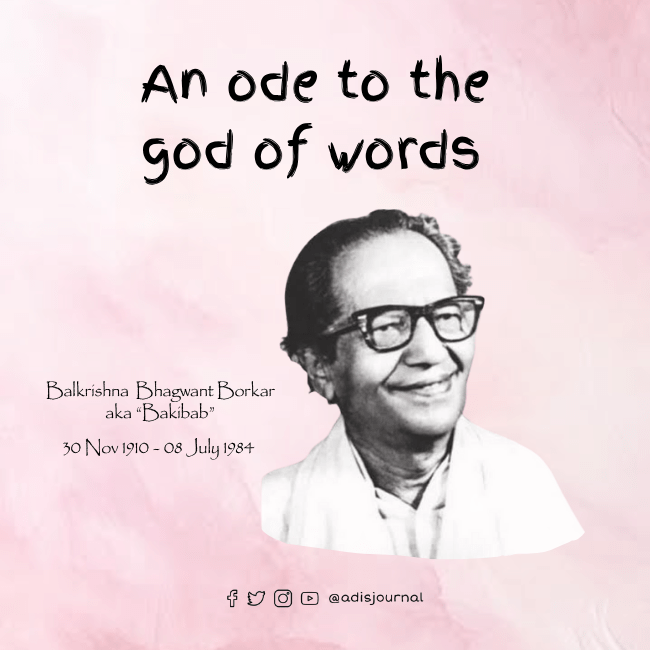
    One such discovery was Balkrishna Bhagwant Borkar, fondly known as Bakibab

    माझ्या गोव्याच्या भूमीत, गड्या नारळ मधाचे||

    These were the first lines through which we were introduced to Bakibab in school. This poem was a tribute to his beloved homeland, Goa. To help us memorize it, we set it to the tune of a popular Marathi film song—“काळ्या मातीत मातीत”. It fitted perfectly.  Memorization was the primary goal back then, but today, I revisit these words with a different appreciation.

    I am talking about him today because 8th July marks his death anniversary.

    Bakibab wrote this particular poem while he was living in Pune, unsure of when he would next return to Goa. He chose the ओवी (Ovi) form; a traditional Marathi meter commonly used in जात्यावरच्या ओव्या (folk couplets sung by women while grinding grain on the जातं or grinding stone). Saint Dnyaneshwar famously composed most of his works in this same format.

    The poem is quite long, so I’ll only touch upon a few lines here. I’m also sharing a link to a archival recording of Bakibab himself reciting this poem on Mumbai Doordarshan. Do give it a listen if you’re interested; his voice brings the verses to life in a way that no text ever can.

    Tribute to homeland

    माझ्या गोव्याच्या भूमीत, गड्या नारळ मधाचे
    कड्या कपारीमधूनी घट फुटती दूधाचे

    माझ्या गोव्याच्या भूमीत, वनश्रीची कारागिरी,
    पानफुलांची कुसर, पशुपक्ष्यांच्या किनारी,

    माझ्या गोव्याच्या भूमीत उन्हाळ्यात खारा वारा
    पावसात दारापुढे सोन्या चांदीच्या रे धारा.

    माझ्या गोव्याच्या भूमीत गड्या साळीचा रे भात,
    वाढी आईच्या मायेने सोनकेवड्याचा हात,

    माझ्या गोव्याच्या भूमीत लाल माती निळे पाणी,
    खोल आरक्त घावात शुद्ध वेदनांची गाणी.

    माझ्या गोव्याच्या भूमीत सारा माझा जीव जडे
    पुरा माझ्या कवनाचा गंध तेथे उलगडे.

    In my homeland of Goa, you get coconuts sweet like honey and you you will see fizzy milky waterfalls everywhere you look.

    In my homeland of Goa, forest is an artist, there are gorgeous motifs of flora and lovely borders of fauna!

    In my homeland of Goa, summer brings crisp sea breeze and monsoon showers gold and silver in my yard!

    In my homeland of Goa, Jiresaal (जिरेसाळ) (local rice variety which smells like cumin) is in abundance, and it get served to everyone with love and care of a mother.

    In my homeland of Goa, we have blue waters and red soil. But it’s not red just naturally, it has soaked into our blood and struggles. Our deep wounds sing songs of hard times.

    It’s my homeland of Goa, which has captured my mind, there you will understand the true flavor of my poems!

    This is my humble attempt to bring a part of this beautiful poem for you. Hope you like it.


    This blog post is part of ‘Blogaberry Dazzle’ hosted by Cindy D’Silva and Noor Anand Chawla.

    Fore more such posts, please click here.

  • Ladies’ Tailor: The best story from the Partition era

    Ladies’ Tailor: The best story from the Partition era

    My experience with books set during the time of India’s Partition has been, frankly, underwhelming. I’ve read quite a few, but most failed to strike the right balance between portraying the horrors endured by refugees and the eternal hope they carried in their hearts. That’s why Priya Hajela’s Ladies’ Tailor stands out. It’s arguably the most compelling book I’ve read about that turbulent time.

    Best book set in the partition times

    At the centre of the story is Gurudev, a Sikh man from a small village in West Punjab. The novel opens with his family’s harrowing journey to Delhi as refugees. While this treacherous migration is a key element; as it is in many Partition narratives; Ladies’ Tailor is much more than a story of escape and loss. It’s about resilience. It’s about how people, even in the bleakest of times, held on to dreams of rebuilding their lives from scratch, armed with little more than hope and determination.

    Though the novel primarily follows Gurudev’s story, Priya Hajela skillfully weaves in a tapestry of other experiences through vivid story arcs of supporting characters. She doesn’t shy away from portraying the full spectrum of human behaviour. Some people took advantage of the chaos, while others offered selfless help, even risking their own safety for mere acquaintances. Her characters are authentic and layered, reflecting the complex nature of humanity during a crisis.

    I’d be negligent if I ended this post without mentioning the stunning cover. It’s not just beautiful; it’s deeply symbolic. In fact, it’s the most captivating cover I’ve come across in 2025. The design thoughtfully captures the novel’s key themes: tailoring and clothing as a profession, Gurudev’s love for literature, the deep yearning for embroidery artists left behind in Pakistan, and the dual imagery of fire and small green vines—representing both the devastation of Partition and the unyielding hope that persists in the human spirit. All of this is set against a lovely pink background adorned with delicate embroidery motifs. A true work of art, I must say.

    Here’s what blurb says

    This is a story of Gurdev and his cohort, a group of refugees who travel east from Pakistan after Partition. It is a tale of falling apart and coming together as the world burns around them.

    Will Gurdev be successful in his new business of making garments for women? Will he find love after his wife and children leave his side? There may be uncertainty here, but there is also relentless hope.

    Journey back in time and experience the refugee spirit as Ladies’ Tailor captures you with all its romance, adventure and one man’s iron will to not just survive, but to thrive with new beginnings.

    About the book

    • Name of Book: Ladies’ Tailor
    • Author: Priya Hajela
    • Publisher: Harper Collins India
    • Publication date: 17 June 2022
    • Pages: 304
    • ISBN – 10: 9356290571
    • ISBN – 13: 978-9356290570
    • Kindle e-book Price: ₹ 399

    My ratings

    Story: 5/5
    Writing Style: 5/5
    Cover Design: 5/5

    Overall Rating: 5/5

    Where to get your copy

    Should you read it?

    Guys, I found my first 5 star read of 2025, and you still asking me should you read it? You are missing a great book if you don’t read this one.


    For more about my views on books, click here.

    This blog post is part of ‘Blogaberry Dazzle’ hosted by Cindy D’Silva and Noor Anand Chawla.

  • On the lookout for joy

    On the lookout for joy

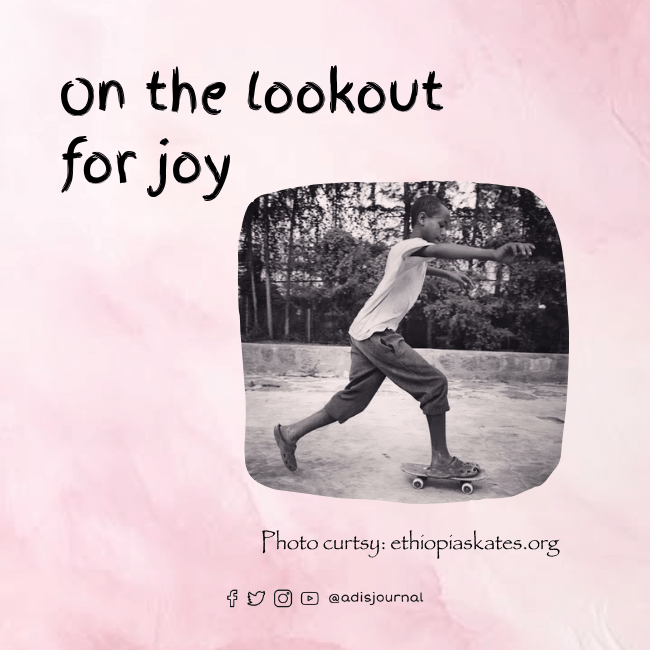
    No matter your age, everyone seeks joy. Even in the most difficult places—like the infamous slums of Dharavi in Mumbai, or war-torn corners of Africa—people still chase happiness. This morning, I stumbled upon almost a decade old Medium article which gave me a glimpse into the lives of Ethiopian kids who’ve taken that pursuit a step further.

    In a place with no roads or paved spaces, they discovered joy in skateboarding. What began with just seven skateboards and 25 boys has now grown into a thriving community known as Ethiopia Skate. Built on passion and perseverance, this club is a testament to what’s possible when people embrace what they have instead of lamenting what they lack.

    When you don’t have, keep your eyes open for it

    These kids have created joy from scraps; turning abandoned buildings into skateparks, transforming local obstacles into ramps and props for tricks. They chose to live their dreams rather than let their limitations define it for them.

    Isn’t that what we all crave? A spark of joy in our day, a reason to smile. Yet so often, we’re caught up in excuses. “Ohh I am too busy, too tired, or I don’t have enough time or resources.” We forget the simple pleasures we once cherished, buried under routine and the chase for money. Along the way, we lose touch with our skills, our hobbies, and the things that once made us feel alive.

    Maybe it’s time to dig out those old paintbrushes, put on your favorite song, or dust off your camera and capture a few moments. Sit back with a drink you love, indulge in your favorite food, and just be. These are the simple joys; the real stress busters.

    I truly believe everyone has their own little ‘joy boosters’ waiting to be rediscovered. So go ahead, find yours. Have some fun!


    For more entries in Adi’s Journal, click here.

    This blog post is part of ‘Blogaberry Dazzle’ hosted by Cindy D’Silva and Noor Anand Chawla in collaboration with Ratna Prabha.

  • When you are looking for that eluding memory

    When you are looking for that eluding memory

    There are moments when a memory hasn’t completely faded, but it’s no longer vivid either; just some scattered fragments lingering in your mind. Often, these elusive memories are about food. A familiar waft of tadka your dadi once added to a simmering dal, or the faint aftertaste of a unique dish prepared to mark a special celebration. These fragments may be small, but you hold on to them tightly, trying to savor them forever.

    Sometimes, the craving to relive these memories through food becomes so strong, it drives you to great lengths. You might travel miles to revisit the place where you first tasted that dish, or reconnect with a long-lost friend or relative just for a familiar bite. But what if everything has changed? What if the people and places are no longer there?

    This is the very question that Hisashi Kashiwai explores in Kamogawa Food Detectives.

    When you are looking for that eluding memory,

    you should wander down a quiet backstreet in Kyoto, Japan, and seek out Mr. Kamogawa and his daughter. A retired police officer, Mr. Kamogawa now uses his unique skills for a different kind of investigation; tracking down forgotten recipes that match the faint traces of your memory: a smell, a taste, something just out of reach.

    This quest to recover lost flavors becomes a journey, not just through Japanese cuisine, but through the culture and landscapes of the country itself. Together with Mr. Kamogawa, you travel through various prefectures, uncovering stories hidden in local dishes and traditions.

    And when he returns from his travels, it’s in the small, unassuming restaurant he runs with his daughter where the magic happens. There, in that humble space, you don’t just relive old memories, you create new ones.

    From the blurb

    What’s the one dish you’d do anything to taste just one more time?
    Down a quiet backstreet in Kyoto exists a very special restaurant. Run by Koishi Kamogawa and her father Nagare, the Kamogawa Diner treats its customers to wonderfully extravagant meals. But that’s not the main reason to stop by . . .
    The father-daughter duo have started advertising their services as ‘food detectives’. Through ingenious investigations, they are capable of recreating a dish from their customers’ pasts – dishes that may well hold the keys to forgotten memories and future happiness.
    From the widower looking for a specific noodle dish that his wife used to cook, to a first love’s beef stew, the restaurant of lost recipes provides a link to the past – and a way to a more contented future.

    About the book

    • Name of Book: The Kamogawa Food Detectives
    • Author: Hisashi Kashiwai
    • Publisher: Mantle
    • Publication date: 5 October 2023
    • Pages: 209
    • ISBN – 10: 0593717716
    • Kindle e-book Price: ₹ 499

    My ratings

    Stories: 4/5
    Writing Style: 3/5
    Cover Design: 4/5

    Overall Rating: 3.5/5

    Where to get your copy

    Should you read it?

    How strong is your craving for that old taste you once enjoyed? Worth a read for that memory, of food, people and places!


    For more about my views on books, click here.

    This blog post is part of ‘Blogaberry Dazzle’ hosted by Cindy D’Silva and Noor Anand Chawla in collaboration with Ratna Prabha.

    This post is also a part of #BlogchatterFoodFest.

error: Content is protected !!