Author: Adi Sathe

  • Lahore – Poignant and rattling story of 1947 partition

    Lahore – Poignant and rattling story of 1947 partition

    The Partition of India is a saddest time in the whole Indian history. India was about to get her independence after paying a huge sacrifice of blood sweat and tears of her sons and daughters, many of whom remained unsung. And at the same time, Jinnah’s direct action plan was creating a mayhem in areas which were going to be East and West Pakistan. Stories around Lahore particularly were distressing. Jinnah’s plan disrupted life in the region. During this time, young ones lost their parents, youth lost their job and love interests. Many families left their home behind and took the leap of faith to reach safety from the massacres happening around. Undivided Punjab was a thing of past. Lahore, was on the other side of the border. Those were the dark days indeed with a tiniest silver lining of Indian independence.

    Magnificent characters from history and her mind

    Writing anything about this period needs to be researched with the highest possible depth. There are so many movers and shakers of the Indian subcontinent’s history involved.  Manreet Sodhi Someshwar had taken up that herculean task to enter into the labyrinth of historical events. And she emerged triumphant out of it. Her research about facts and stalwart figures like Sardar Vallabhbhai, Pandit Nehru, Jinnah, etc. is thorough. 

    But, this is not a history book. Lahor, Book 1 of the partition trilogy, is a novel. It’s a story of people whom Manreet has conjured. She had done such a wonderful job of making them equally real as these historical giants. Manreet is a master storyteller. Her story is engaging. It keeps you reading through its pages until you feel burdened by the emotions her characters are going through.

    Cover is so colourful – Just like Lahor

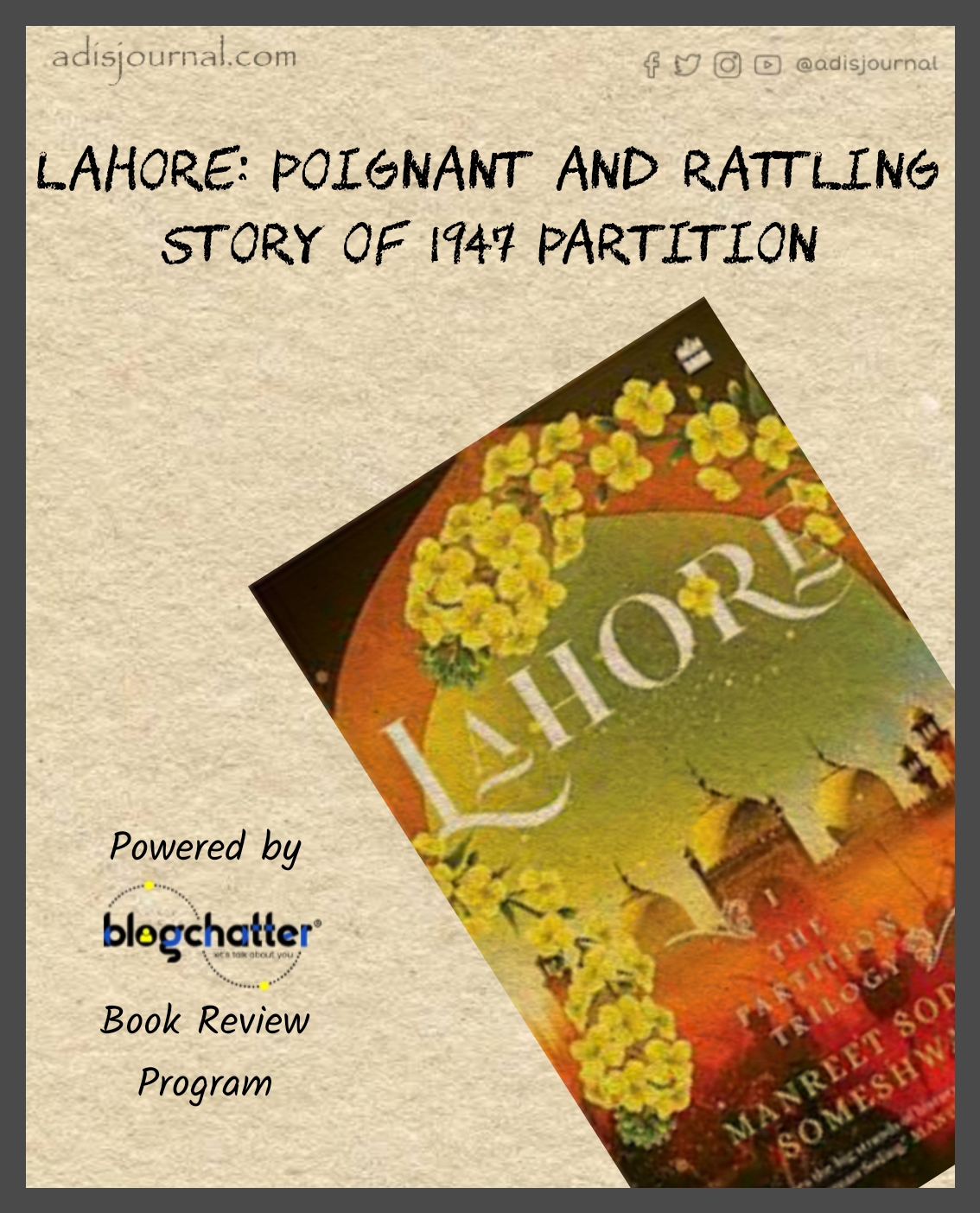
    I just loved the colourful cover of this book. Vibrant red with yellow flowers and the iconic building of Badshahi mosque on the cover catches your eye at a first glance. I have heard stories about how colourful and lively Lahor and other historical cities have been. This cover design has done justice to those glorious tales.

    If you like historical fiction, you should not miss this book. I am so much looking forward to Kashmir and Hyderabad, the next two books Manreet has planned for this partition trilogy.

    Blurb

    In the months leading up to Independence, in Delhi, Jawaharlal Nehru and Vallabhbhai Patel are engaged in deliberations with British Viceroy Dickie Mountbatten over the fate of the country. In Lahore, Sepoy Malik returns home from the Great War hoping to win his sweetheart Tara’s hand in marriage, only to find divide-and-rule holding sway, and love, friendships, and familial bonds being tested.

    Set in parallel threads across these two cities, Lahore is a behind-the-scenes look into the negotiations and the political skulduggery that gave India its freedom, the price for which was batwara. As the men make the decisions and wield the swords, the women bear the brunt of the carnage that tears through India in the sticky hot months of its cruellest summer ever.

    Backed by astute research, The Partition Trilogy captures the frenzy of Indian independence, the Partition and the accession of the states, and takes readers back to a time of great upheaval and churn.

    About the book

    Title: Lahor

    Author: Manreet Sodhi Someshwar

    Publisher: Harper Collins

    Pages: 313

    Where to buy


    This review is powered by the Blogchatter Book Review Program. Also read more book reviews penned by me here.
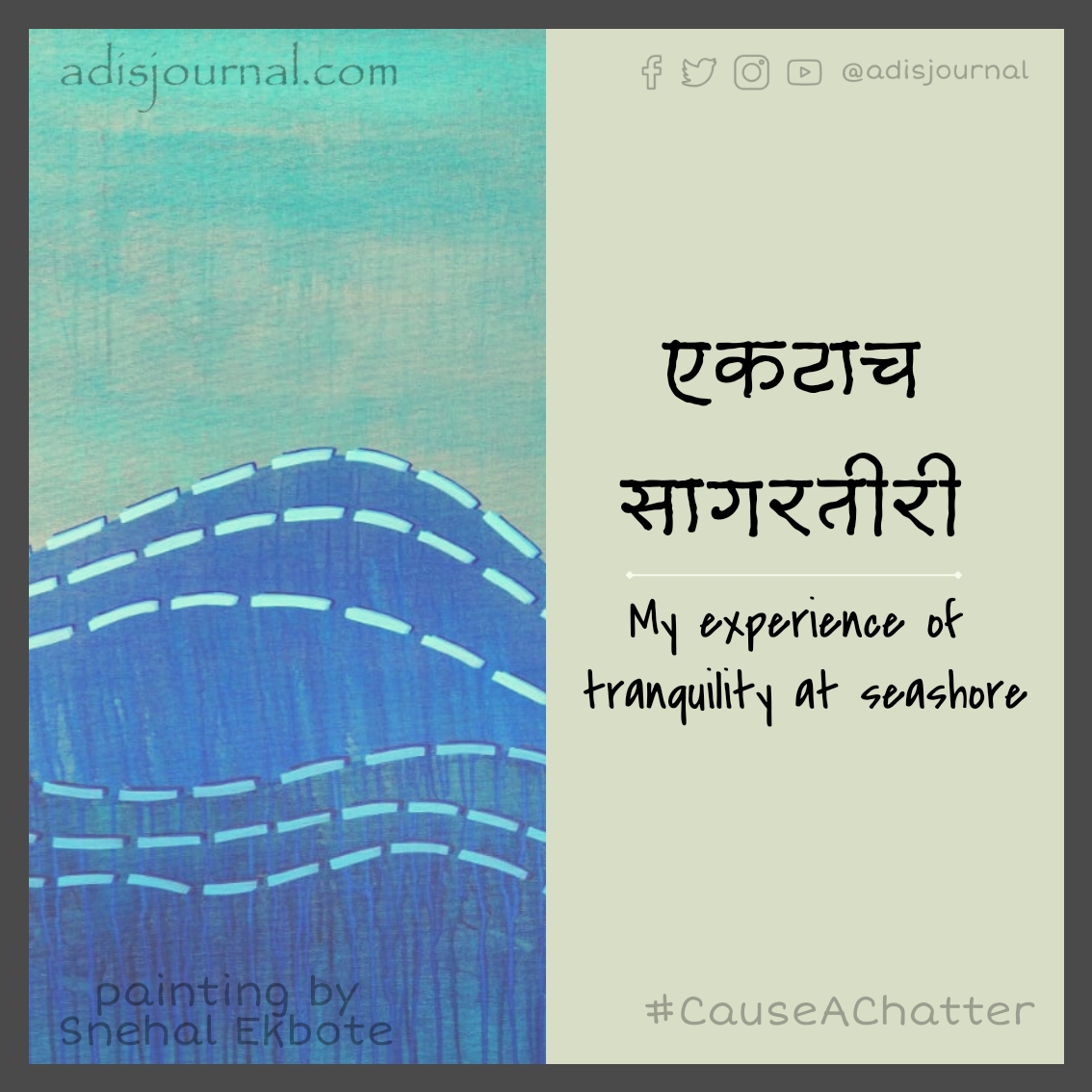
  • एकटाच सागरतीरी: My experience of tranquility at the seashore

    एकटाच सागरतीरी: My experience of tranquility at the seashore

    हलकेच वाहतो वारा,
    त्या निरभ्र संध्याकाळी.
    मी निळाईत बघताना,
    खग माळ उडे अभाळी.

    माडाच्या आडोशाला,
    बसलो सागरतीरी.
    मौनास ऐकताना,
    मी एकटाच त्या वेळी.

    पायाशी येती लाटा,
    फेसळून त्या फुटती
    पण माघारी वळताना,
    नाजूक काढती नक्षी.

    In 2021, my good friend and Painter Snehal Ekbote and I decided to collaborate on her painting series which she had curated. We came up with an idea of desk calendar for the year 2022. It is available for sale for which you can contact me on my social media, or write to me at adisjournalpune@gmail.com.

    This poem is a part of that calendar where I have described how I experienced a tranquility at seashore in my recent visit in Konkan.


    This post is part of Blogchatter’s CauseAChatter. You can find my other entries to this campaign here.

  • Nature and Culture: the eternal connection

    Nature and Culture: the eternal connection

    Artforms like literature, music and dance are deep rooted parts of cultures all around the world. Human stories are told through these arts. They talk about the experiences we gather in our life. Surroundings in which we live are reflected in our artforms. Today, I would like to talk about the strong eternal connection between nature and cultures. 

    Nature through ancient cultures

    The evolution of human civilization is always triggered by some event, new learning or accident involving nature. Utilisation of fire for our domestic use was the first big step. Next one came in the form of domestication of wild grasses in the form of agriculture. The other one of many was the domestication of wild beasts starting something we call animal husbandry. We started our process of civilization by interacting with nature. On the other hand, cultural aspects of human society were also developing. These first interactions with nature are depicted in cave paintings made by our ancestors all around the world. These paintings further evolved to glyphs which were used to communicate with each other.

    Soon we progressed to the various languages and the birth of fine arts was around the corner. Creative juices in the human mind started flowing and stories and poems emerged. These stories and poems are full of nature and it’s beauty which was around those times. We celebrated nature through our music, paintings, writings and sculptures.

    Nature and Indian culture

    The most illustrious example of depiction of nature in Indian literature is a Kālidāsa’s lyrical poem Meghadūta. It’s a story of a banished Yaksha. He wants to send a letter to his beloved wife back home. He asks if he can deliver this letter. While describing a way to reach Yaksha’s home, Kalidasa has described the nature, the geography of the land in so detail that it could become a guide for a traveller.

    However, nature reflected in our poetry is always a local nature. For example, English kids will sing “Rain rain go away, come again another day” as they rarely get a bright sunny day to play out. On other hand, here in Maharashtra, we have a marathi nursery rhyme exactly opposite where we call out to rain so that it will pour. “ये रे ये रे पावसा, तुला देतो पैसा.” is a classic one. 

    In India, our climate changes in every region. It reflects in our folk songs very naturally. All the rain songs in the Marathi region will talk about months of Ashadh and Shravan. (आषाढाला पाणकळा, सृष्टी लावण्याचा मळा). But the monsoon reaches northern India almost a month later. So, naturally, all their rain songs talk about Saawan and Bhado. (तेरे नैना सावन भादो, फिर भी मेरा मन प्यासा) and so on. And when a kid in Marathi will relate to a poem गवतफुला रे गवतफुला as he can see the wild grass flowers blooming around just as easily as an English kid can see a Daffodil flower from Wordsworth’s famous poem.


    So you also tell me if you find any such examples in the comments below and let me know how you like this post.
    This post is part of Blogchatter’s CauseAChatter. You can find my other entries to this campaign here.

  • ऋतुगान – a poem celebrating Marathi seasons

    ऋतुगान – a poem celebrating Marathi seasons

    वसंत ऋतुराज,
    नवा हा वर्षारंभ,
    सृष्टी ही आनंदाने,
    बहरली…

    त्यामागे येतो ग्रीष्म
    त्याचे हो दोन मास
    पहिली सर त्यात
    बरसली…

    आली हो वर्षा राणी,
    गाऊया हर्ष गाणी
    सृष्टीने हिरवाई
    नेसलेली…

    चांदणे घेऊनी हा,
    शरद आला बघा,
    सोबत आली आई,
    आदिशक्ती…

    चाहूल हेमांताची,
    लागते साऱ्यांनाच,
    येई हो जेव्हा थंडी,
    थोडी थोडी…

    शिशिर कडाक्याने,
    अंग हे गारठले,
    अगोठी जागोजागी,
    पेटलेली…

    वर्षाचे बारा मास,
    त्यात हे सहा ऋतू,
    समान संख्या पहा,
    वाटलेली…

    In Maharashtra, we believe that year starts with the month of Hindu calendar Chaitra and goes on for twelve months ending at Falgun (aka, fagun in Hindi). Traditionally, these twelve months are devided in 6 seasons, Vasant (blossoms / spring), Grishma (Season of first rain), Varsha (rains), Sharad (Season of abundance), Hemant (mild winter), Shishir (Chilling time).

    I have tried explaining these seasons in this poem. Hope you like it. Let me know in the comments bellow.


    This post is part of Blogchatter’s CauseAChatter. You can find my other entries to this campaign here.

  • Nice to be acquainted with A to Z’s of Tilottama

    Nice to be acquainted with A to Z’s of Tilottama

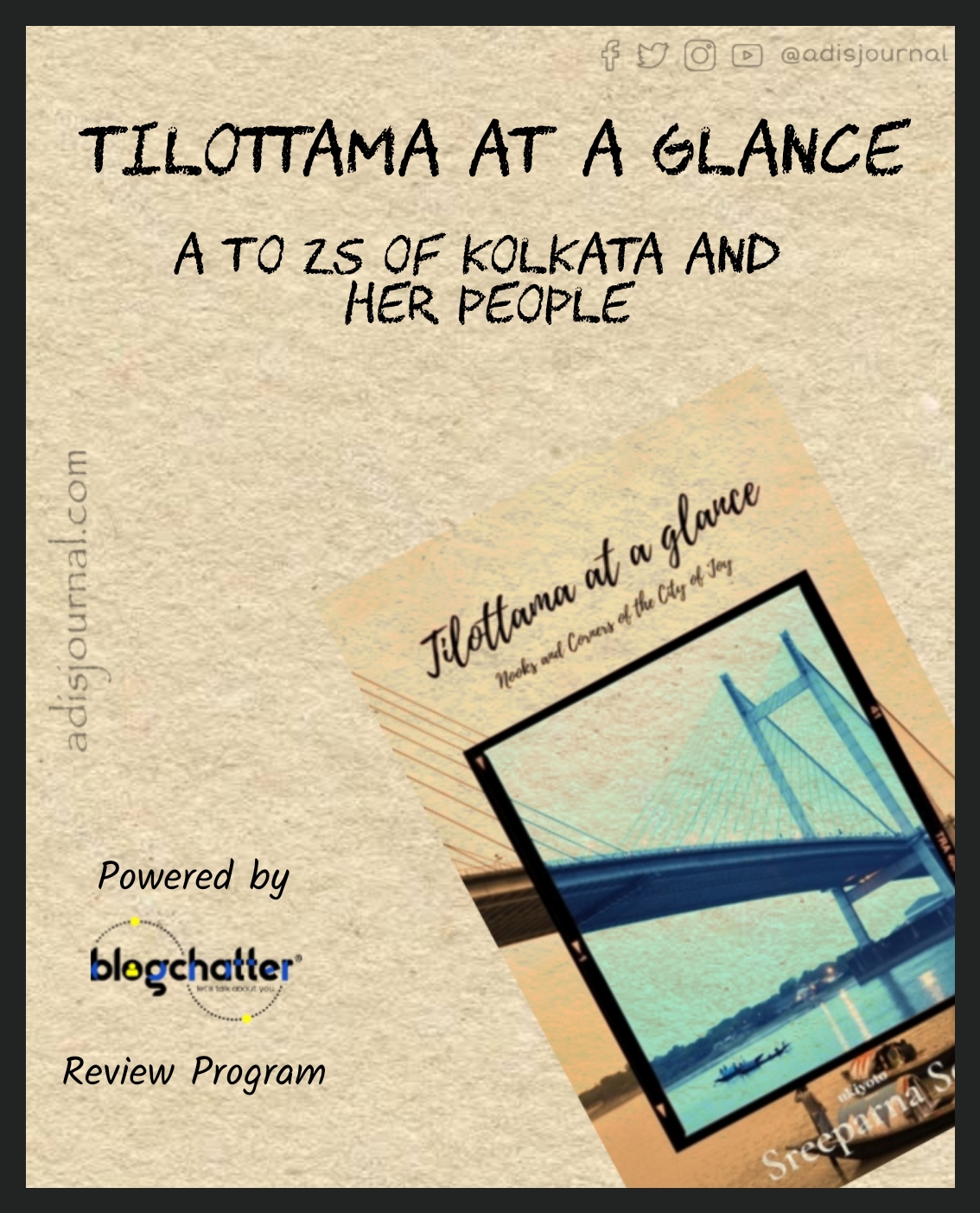
    Jibanananda Das, a Bengali Poet once said, কোলকাতা কোনোদিন তিলোত্তমা হবে meaning, Kolkata will one day be Tilottama. Kolkata, our own city of joy, music, art and culture has always fascinated me. It is still very illusive for me as yet I haven’t set my foot on her soil. It keeps intriguing me through the references I see in movies, and read in stories. Recently, I got an opportunity to get acquainted with the A to Zs of this Tilottama through the lens of a book called Tilottama at a glance, written by Sreeparna Sen.

    Unique way to introduce Tilottama

    When you pick up a book which started as a part of a blogging project, you kind of go in with the preconceived notion about the book. However, this particular book will break your assumptions and will make you read it through and know about this wonderful city in one go. It has been a really long time that I have finished a book in one sitting. This short read of just 68 pages, takes you on a journey through the streets of Kolkata taking you to meet its people and their quirk.

    I really appreciate the author for not making it a typical A to Z about a city. It’s not a list of famous places and tourist attractions. There are a couple of iconic locations like Howrah Bridge and Victoria memorial that are part of this book. However, I loved the way Sen has introduced the culture of Kolkata and habits of her citizens as quintessential parts of the identity of the city. The strong passion for food, music and art shared by the people of Kolkata is evident in many pages of this book. 

    My Rating

    I will definitely recommend this book if you want to get acquainted with Kolkata and the people of the city of joy before going in for your maiden visit to the city. Sreeparna Sen has done a great job in introducing her readers to the quirks of her city.

    Content: 4/5

    Writing style: 4/5

    Cover Design: 4/5

    Blurb

    Tilottama At A Glance is not merely the A B C’s of Kolkata for a casual traveller. This book allows you to acquaint yourself with the heart and soul of a rather unusual Indian city with loads of quirks. It is a journey through the culture, history, architecture, idiosyncrasies and other endearing or astonishing traits of Kolkata, that make this city unique.

    About Author

    Sreeparna Sen is a banker and finds her solace in writing. She has authored the book Tales of Wizardencil. Sen is a part of 10 anthologies including an international project Until Dawn.

    About the book

    Title: Tilottama at a glance

    Author: Sreeparna Sen

    Publisher: Ukiyoto Publishing

    Pages: 68

    Where to buy

    This review is powered by the Blogchatter Book Review Program. Also read more book reviews penned by me here.

  • भेट एका चित्र-तपस्वीची

    भेट एका चित्र-तपस्वीची

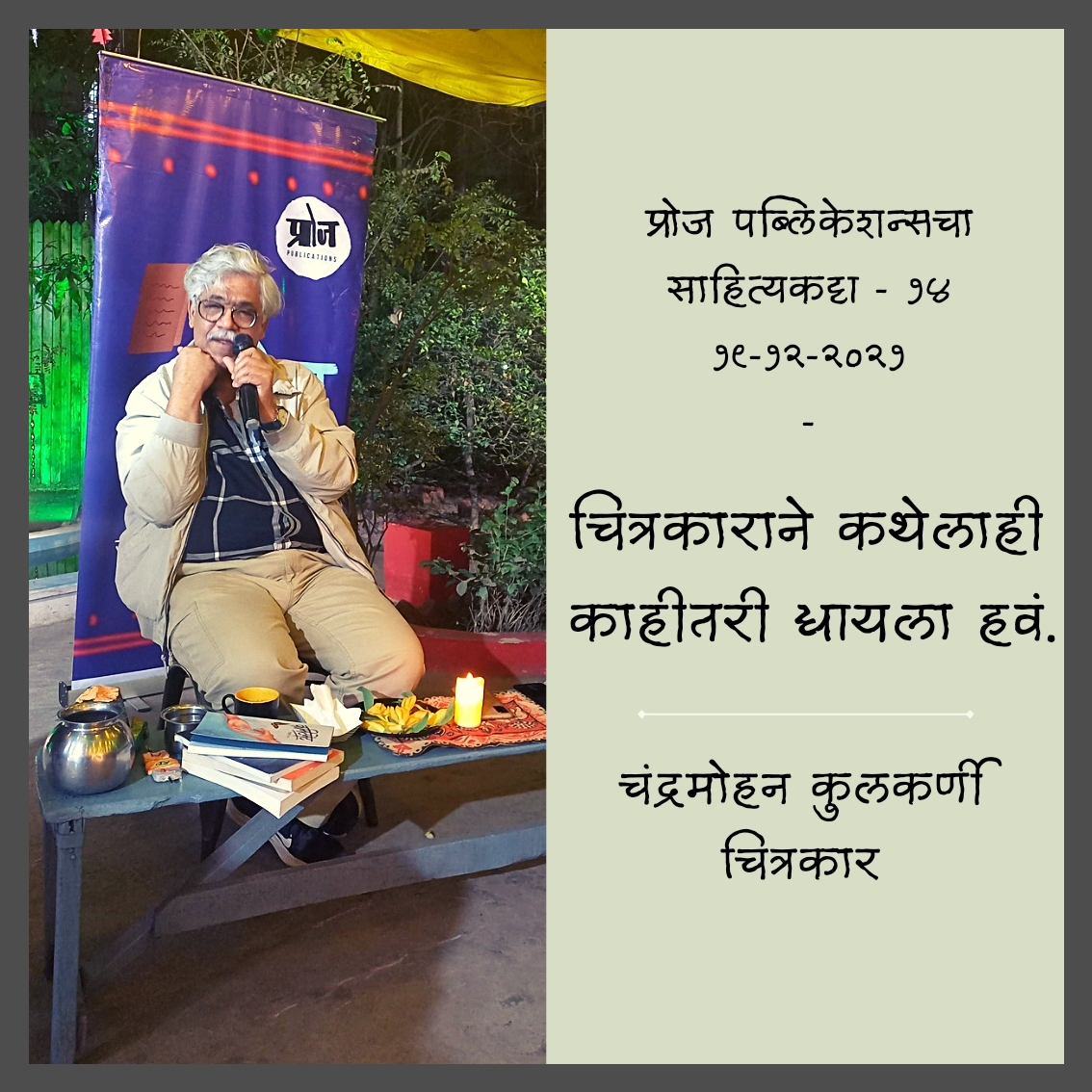
    दिवाळी अंक, चित्र आणि लेखन या साऱ्या बद्दल अत्यंत दांडगा अनुभव असलेल्या एका महान व्यक्तीची काल भेट घेण्याचा योग आला तो Prose Publications  च्या आमच्या साहित्यकट्ट्याच्या निमित्ताने. श्री. चंद्रमोहन कुलकर्णी, कित्येक वर्षांची चित्र-तपस्या असलेला एक सुंदर कलाकार! अनेक पुस्तकांची मुखपृष्ठे, दिवाळी अंकातील साहित्याला अनुरूप किंबहुना कित्येक वेळा त्या साहित्यातील एक वेगळाच पैलू उजेडात आणणारी चित्रे रसिक वाचकांच्या हातात देणारा हा कलाकार कट्ट्यावर अगदी मनमुराद ऐकता आला. 

    हो, अगदी बरोबर वाचलं तुम्ही. ऐकता आला. चंद्रमोहन जी हे जितके भन्नाट चित्रकार आहेत तितकेच उत्तम लेखक देखील आहेत. त्यांची कुंचला आणि लेखणी, दोन्हीवर जबरदस्त पकड आहे. काल त्यांच्याशी गप्पा मारताना त्यांनी मांडलेला एक विचार मनात घर करून गेला. कित्येकदा साहित्यावर किंवा कथेसाठी चित्र काढताना त्या कथेतील एखादा भाग निवडून त्याच चित्रण होतं. पण या मुद्द्यावर त्यांचं मत मांडताना चंद्रमोहन म्हणाले, “चित्रकाराने कथेलाही काहीतरी द्यायला हवं.” कथेचा आपल्या स्वतःच्या दृष्टिकोनातून विचार करून आपलं काही आकलन त्या चित्रांतून आले तर अधिक कलात्मक निर्मिती होईल. 

    इतर कलांकडे डोळस नजरेने बघत त्यांचा आस्वाद घ्याव, तुमच्या दृष्टिकोनातून तो अनुभव पुढे नेण्याचा प्रयत्न करावा. यातूनच कलाकार म्हणून आपलं भावविश्व समृद्ध होत असतं. कालच्या कट्ट्यावरच्या गप्पांतून चंद्रमोहनजींनी असेच माझ्या भावविश्वाच्या अकाऊंट मधे अजून एक फिक्स डीपॉझिट तयार केले. या नवीन इनव्हेस्टमेंट साठी कट्ट्याला खूप खूप प्रेम!